Guide
Promotion and relegation explained
Why teams move up and down between divisions, and how the system keeps every match meaningful.
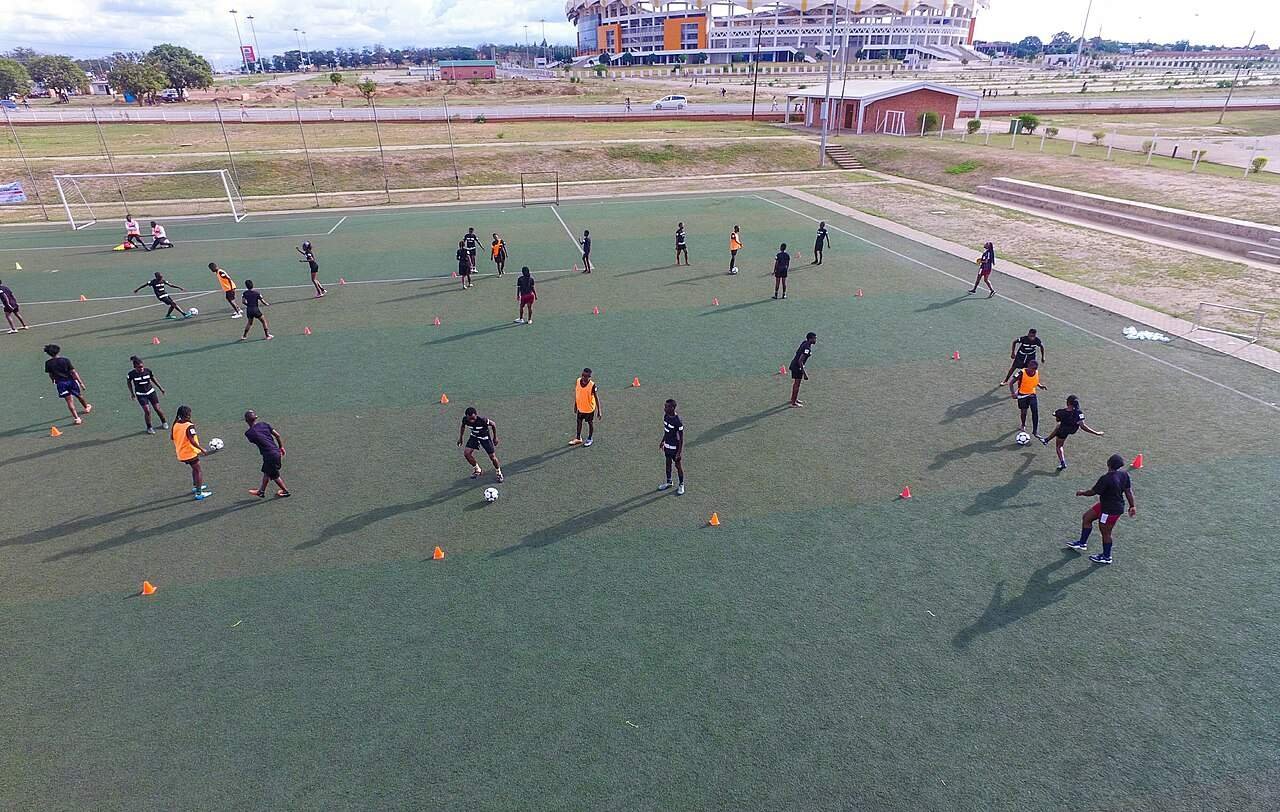
Commentators throw around terms like "false nine", "holding midfielder" and "inverted full-back" as if everyone was born knowing them. This guide strips it back: the eleven positions on a football pitch, what each player is actually responsible for, and how the numbers in a formation like 4-3-3 fit together. Once you understand the roles, the lineups you see on ScorePulse before kick-off become a story about how each coach plans to play.
The goalkeeper is the only player allowed to handle the ball, and only inside their own penalty area. The obvious job is stopping shots, but the modern keeper does far more: organising the defence at set pieces, claiming crosses, and starting attacks with accurate distribution. Many top teams expect their goalkeeper to be comfortable passing under pressure, effectively acting as an extra defender when the team has the ball.
Usually two, sometimes three. Centre-backs defend the middle of the pitch in front of the goal: winning headers, making tackles and blocks, and marking the opposition striker. The best combine physical strength with positioning — being in the right place early beats a spectacular last-second tackle.
Full-backs defend the flanks and, in the modern game, attack down them too. They are often the fittest players in the team, sprinting up to overlap the winger and cross, then recovering to defend. When a team plays with three centre-backs, the wide defenders are called wing-backs and play much higher, providing the team's width almost alone.
The shield. This player sits in front of the defence, breaks up attacks, wins the ball back and keeps possession moving with simple, secure passes. It is the least glamorous and one of the most important roles: when this player has a bad game, the whole team looks open. Because midfielders wear many shirt numbers across different traditions, fans often use the numbers as shorthand — a "number 6" usually means this deep, defensive role.
The engine room. Box-to-box midfielders (the classic "number 8") link defence and attack: pressing, tackling, carrying the ball forward and arriving late in the area to shoot. Every good team has at least one player who sets the tempo here.
The "number 10" — the creative hub between midfield and the forwards. This player operates in the pockets of space behind the striker, threading through-balls, shooting from range and taking most set pieces. Defences plan entire shapes around denying this player time on the ball.
Wingers play wide and high, tasked with beating their full-back one against one, cutting inside to shoot, or delivering crosses. A traditional winger hugs the touchline and crosses with their stronger foot; an "inverted" winger does the opposite, playing on the flank of their weaker side so they can cut in and shoot with their strong foot.
The main goalscorer — the "number 9". A classic centre-forward occupies the central defenders, holds the ball up and finishes chances in the box. Variations include the target man (physical, aerial), the poacher (lives off scraps in the six-yard box) and the false nine, who drops deep into midfield to drag defenders out of position and create space for others.
A final idea ties it all together: positions describe where a player starts, not where they stay. Modern coaches ask players to interpret roles fluidly. A full-back may drift into midfield when his team has the ball (the "inverted full-back"), a winger may become a second striker, and a defensive midfielder may drop between the centre-backs to start attacks. Players who can perform two or three roles — utility players — are gold for a squad across a long season of injuries and suspensions.
Substitutions show this clearly: a change is rarely like-for-like. A coach protecting a lead swaps a winger for an extra midfielder, changing the team's shape mid-match; a coach chasing a goal does the reverse, sometimes finishing with four forwards on the pitch. When the ScorePulse details view shows a substitution, it is worth glancing at the new shape as well as the fresh legs.
A formation is written as defenders–midfielders–forwards, goalkeeper not counted. In 4-3-3: four defenders, three midfielders, three forwards. In 4-2-3-1: four defenders, two defensive midfielders, three attacking midfielders, one striker. In 3-5-2: three centre-backs, five across midfield (including wing-backs), two strikers. The numbers describe a starting shape, not a cage — good teams shift shape constantly depending on whether they have the ball. When you open a match on our live scores page and tap into the details, you will see both teams' formations next to the lineups, which tells you at a glance whether to expect an open game or a tactical chess match. For more on reading what happens during the game itself, see our guide to understanding match stats.
Why teams move up and down between divisions, and how the system keeps every match meaningful.
Fees, loans, release clauses and deadline day: how players actually move between clubs.
How the Saudi Pro League rose so quickly, how the competition is structured, and the stars who took it global.